ex:Lamp
The root tag is the type.
BlockML is a language for ideas. You write them as Blocks in .bml files — readable by people, writable by LLMs, precise enough for machines.
<ex:Lamp xmlns="http://blockml.org/bml"
  xmlns:core="org.blockml.bml.core"
  xmlns:ex="com.example.bml">

  <baseType>
    core:Block
  </baseType>
  <is>
    A lamp with a brightness
  </is>
  <properties>
    <brightness type="Integer">
      <value>80</value>
    </brightness>
  </properties>
</ex:Lamp>The snippet above is a complete Block, not a sketch of one. The root tag is the type. Then come baseType, is, and the members that belong to it.
ex:Lamp
The root tag is the type.
baseType
What it extends.
is
One sentence of meaning.
properties
The values that belong to it.
A Lamp is not a bag of fields. It is made of other Blocks — a shade, a bulb — in the same language.
<ex:Lamp xmlns="http://blockml.org/bml"
  xmlns:core="org.blockml.bml.core"
  xmlns:ex="com.example.bml">

  <baseType>
    core:Block
  </baseType>
  <is>
    A lamp made of nested parts
  </is>
  <aggregations>
    <parts type="ex:Part">
      <composition>
        <ex:Shade />
        <ex:Bulb />
      </composition>
    </parts>
  </aggregations>
</ex:Lamp>Worlds add domain types. They do not invent a new language.
<mb:Brick2x4 xmlns="http://blockml.org/bml"
  xmlns:core="org.blockml.bml.core"
  xmlns:mb="com.machineblocks.bml">

  <baseType>
    core:Block
  </baseType>
  <is>
    A 2×4 building brick
  </is>
  <properties>
    <color type="Text">
      <value>Red</value>
    </color>
  </properties>
</mb:Brick2x4><app:HomeScreen xmlns="http://blockml.org/bml"
xmlns:core="org.blockml.bml.core"
xmlns:app="com.metaphone.bml">
<baseType>
core:Block
</baseType>
<is>
The app home screen
</is>
<properties>
<title type="Text">
<value>Inbox</value>
</title>
</properties>
</app:HomeScreen>The Idea stays one Block. HTML, STL or firmware is an implementation detail.
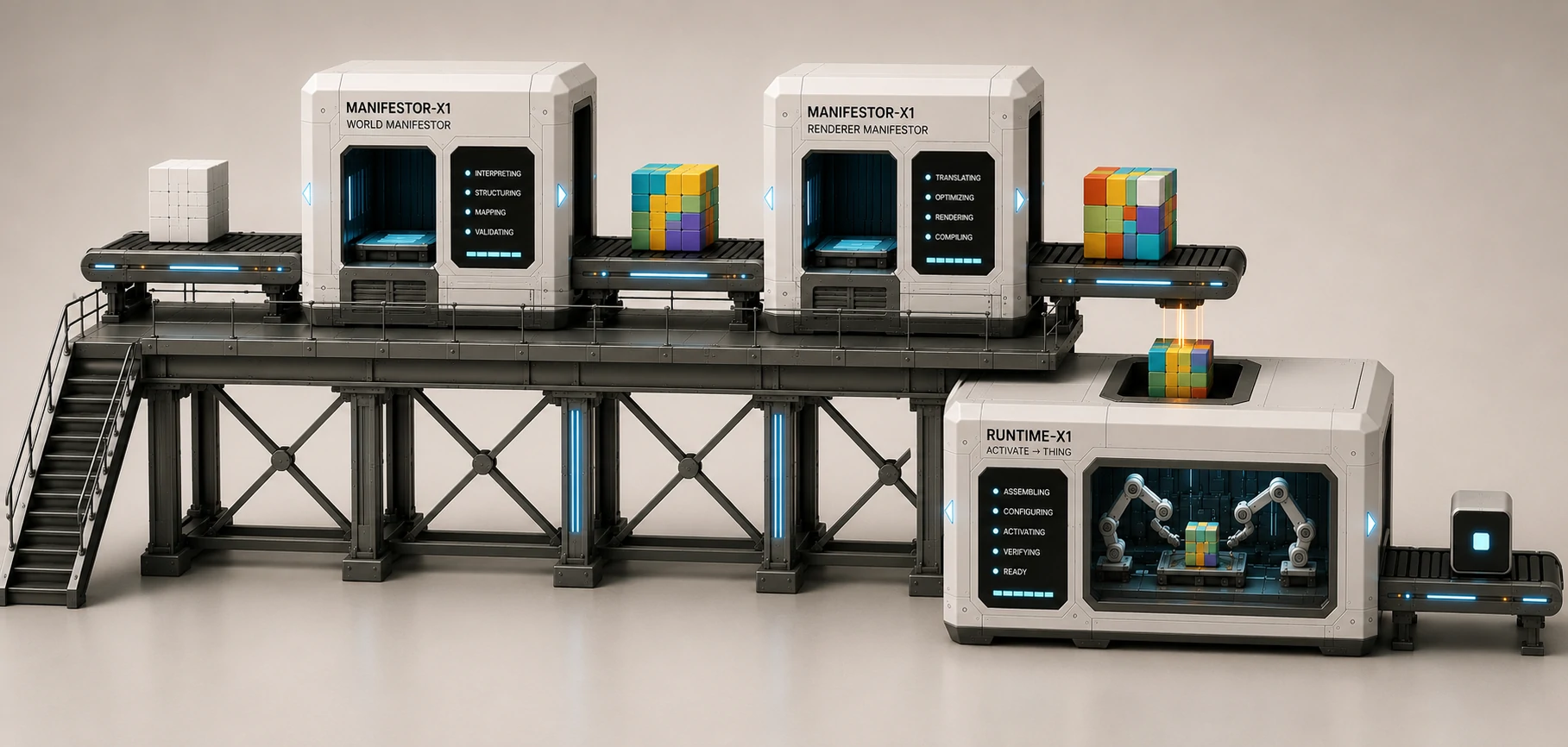
Run npx @blockml/cli init with a package FQN, then install and validate. Open the folder in Cursor or Claude Code.